Knowing how to choose a tennis bracelet comes down to four quiet decisions: how much diamond weight you want on the wrist, how the stones are held, how the bracelet closes, and how it sits once clasped. Get those right and you have a piece worn daily for years rather than admired in a drawer. This guide walks through each, with the carat bands, setting styles, and fit notes a first-time buyer actually needs.
A tennis bracelet is a continuous line of matched diamonds, each held in its own setting and linked so the line stays flexible and lies flat against the wrist. The form is deliberately simple. That simplicity is exactly why the small choices matter so much.
How to choose a tennis bracelet: start with total carat weight
Total carat weight, written t.c.w., is the combined weight of every diamond in the bracelet. It is the single number that most changes how the piece reads on the wrist. A tennis bracelet carat guide is less about a target figure and more about understanding what each band looks like in daily wear, because stones are spread across the full length rather than concentrated in one center.
Total carat weight on a 7-inch wrist
- 1.0 ct t.c.w.
- Fine, delicate line. Each diamond reads as a quiet point of light. Layers well; suits a smaller wrist.
- 2.0 ct t.c.w.
- The classic everyday weight. Clearly present, still understated. Most-requested band.
- 3.0 ct t.c.w.
- Noticeably brighter and wider. Reads as a considered piece without becoming formal.
- 4.0 ct+ t.c.w.
- A statement line. Larger individual stones, more presence; best for an occasion or a confident daily wearer.
Two bracelets of the same total weight can look different. The same 3 carats split across many small stones gives a continuous shimmer, while fewer, larger stones give more distinct flashes. Neither is better; it is a matter of the effect you prefer. Every Privosa tennis bracelet ships with a Certificate of Specification listing carat, color, clarity, cut, and setting, so the number you read is the number on your wrist.
Tennis bracelet settings: prong, channel, bezel
The setting is how each diamond is held to the line. Among tennis bracelet settings, three are standard, and the choice affects sparkle, security, and how the piece feels against skin and sleeve.
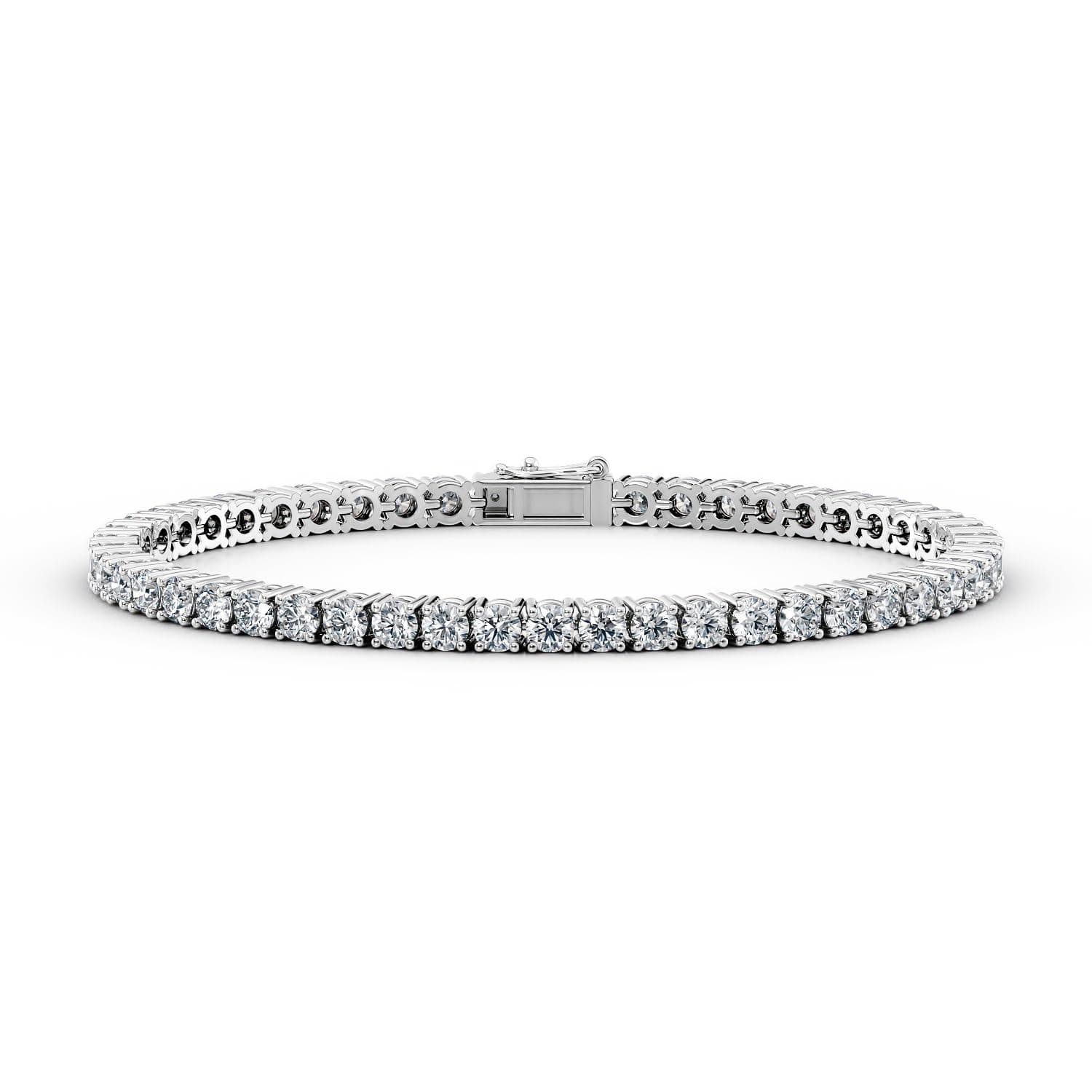
- Prong (four-prong is most common): small metal claws hold each stone, leaving it open on the sides. The most light reaches the diamond, so this setting is the brightest. Prongs should be checked periodically, as with any prong-set piece.
- Channel: diamonds sit in a recessed track between two rails of gold, with no prongs. The surface is smoother and snag-resistant, which suits an active daily wearer. Light enters from the top, so the look is sleek rather than maximally brilliant.
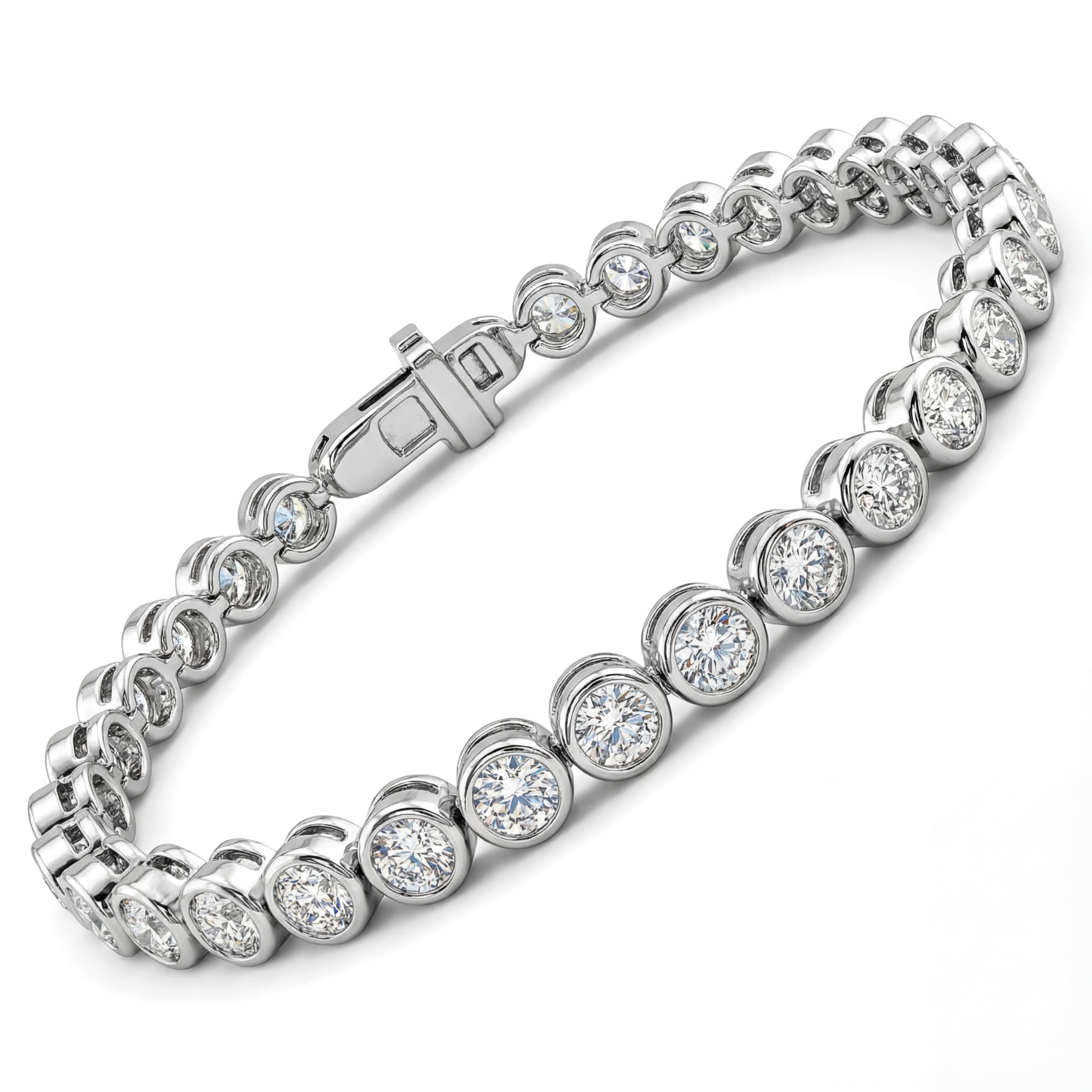
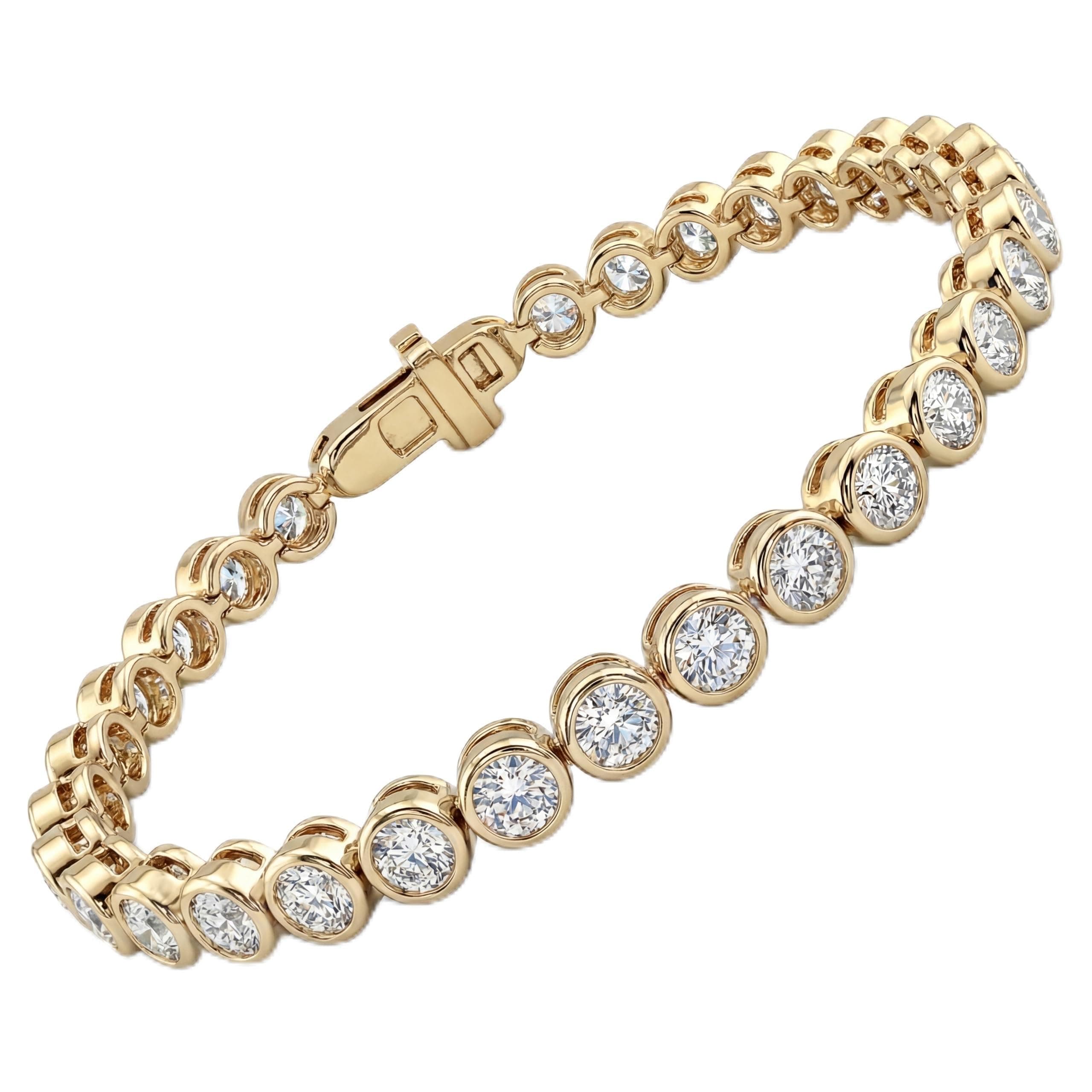
- Bezel: a thin rim of gold wraps each stone fully. The most secure and the most modern in feel, with a soft, contained sparkle. A good choice if you want to think about the bracelet least.
If you want maximum fire and do not mind occasional maintenance, prong is the traditional answer. If durability and a clean line matter more, channel or bezel will serve you better.
Clasp security: the part most people overlook
A tennis bracelet has no center stone to anchor it, so the clasp does real work. The most reassuring closure is a box clasp paired with a figure-eight safety latch. The box clasp clicks shut with an audible snap; the safety latch is a second hinged catch that folds over the join. Two independent closures mean that if one releases, the bracelet stays on.
A tennis bracelet is only as secure as its clasp. Two closures, not one.
When you receive a bracelet, practice opening and closing the clasp a few times so the motion becomes familiar. You should feel a clear, positive click. If a clasp ever feels loose or vague, stop wearing the piece and contact us before you lose a stone or the bracelet itself. Our concierge can advise and arrange service.
Length and fit on the wrist
Tennis bracelet length is usually quoted in inches and should allow a little movement. Worn too tight, the line cannot lie flat and the clasp takes strain; too loose and it spins or slides over the hand. Aim for a bracelet that rotates slightly but cannot pass over the widest part of your hand.
Choosing a length
- Measure
- Wrap a soft tape around the wrist just below the wrist bone; note the snug measurement.
- Add for comfort
- Add roughly 0.5 to 1 inch to that measurement for a bracelet that drapes rather than grips.
- Common range
- 7 inches suits many wrists; 6.5 inches for slimmer wrists, 7.5 inches for fuller wrists or a looser drape.
- Check the fit
- It should slide toward the hand but not over it, and lie flat when your arm is at rest.
If you are buying as a gift and cannot measure, 7 inches is the safest starting point, and a bracelet that runs slightly long is easier to live with than one that runs short. Our concierge can talk through sizing before you order.
Lab-grown or natural across a line of diamonds
Because a tennis bracelet sets many stones side by side, consistency between them matters more than in a single-stone piece. Privosa offers both natural and lab-grown diamonds, and both are genuine diamonds, identical in how they look and wear. The practical difference for a tennis bracelet is reach: for a given budget, lab-grown diamonds let you put more carat weight, or more closely matched stones, on the wrist.
Diamond tennis bracelet buying often comes down to this trade-off. Choose natural diamonds if their origin matters to you; choose lab-grown if you want a larger or more uniform line for the same outlay. Where stones are independently assessed, IGI grading is available on request; where a stone is specified but not independently graded, we say so plainly. Either way, the Certificate of Specification records exactly what you are buying.
Caring for a tennis bracelet
- Clean gently at home: warm water, a drop of mild dish soap, and a soft toothbrush along the underside of the stones, where skin oils dull the light. Rinse and pat dry.
- Take it off for the gym, swimming, gardening, and sleep. Repeated knocks loosen settings and clasps over time.
- Store it flat or laid out rather than tangled with other pieces, so the line is not stressed or scratched.
- Have prong-set bracelets checked periodically; a jeweler can confirm the prongs and clasp are tight long before anything works loose.
- Solid 14k gold is hard-wearing and hallmarked, but it is still a precious metal. Keep it away from chlorine and harsh chemicals, which can damage the alloy over time.
A well-chosen tennis bracelet is meant to be worn, not reserved. Match the carat weight to how present you want it to feel, pick a setting that fits your daily life, insist on a secure clasp, and get the length right. Do that and the piece quietly becomes part of how you dress, year after year. When you are ready, our concierge is reachable by phone and email with same-day response to help you choose.
Frequently asked
What total carat weight should I choose for a tennis bracelet?+
For everyday wear, 2 carats total is the most-requested band: clearly present but understated. Step up to 3 carats or more for a brighter, wider line, or down to 1 carat for a delicate look that layers well. Because the weight is spread across the whole bracelet, the effect on the wrist matters more than the number alone.
How do I know my tennis bracelet won't fall off?+
Security comes from the clasp. Look for a box clasp paired with a figure-eight safety latch — two independent closures, so the bracelet stays on even if one releases. You should feel a clear click when it shuts. If a clasp ever feels loose, stop wearing the piece and contact our concierge before a stone or the bracelet is lost.
What length tennis bracelet should I order?+
Measure your wrist snugly just below the wrist bone, then add about half an inch to an inch for comfortable drape. Seven inches suits many wrists; 6.5 inches for slimmer wrists and 7.5 inches for fuller ones. It should slide toward your hand but not over it. If you are unsure or buying a gift, 7 inches is the safest starting point.
Should I choose lab-grown or natural diamonds for a tennis bracelet?+
Both are genuine diamonds and look and wear identically. Because a tennis bracelet sets many stones in a row, lab-grown diamonds let you put more carat weight, or more closely matched stones, on the wrist for the same budget. Choose natural if origin matters to you. Either way, your Certificate of Specification records exactly what you bought.
Which setting is best — prong, channel, or bezel?+
Prong settings leave each diamond most open to light, so they are the brightest, though prongs should be checked periodically. Channel settings sit the stones in a smooth, snag-resistant track that suits active wear. Bezel settings wrap each stone fully in gold for the most security and a modern, contained sparkle. Match the setting to how hands-off you want to be.