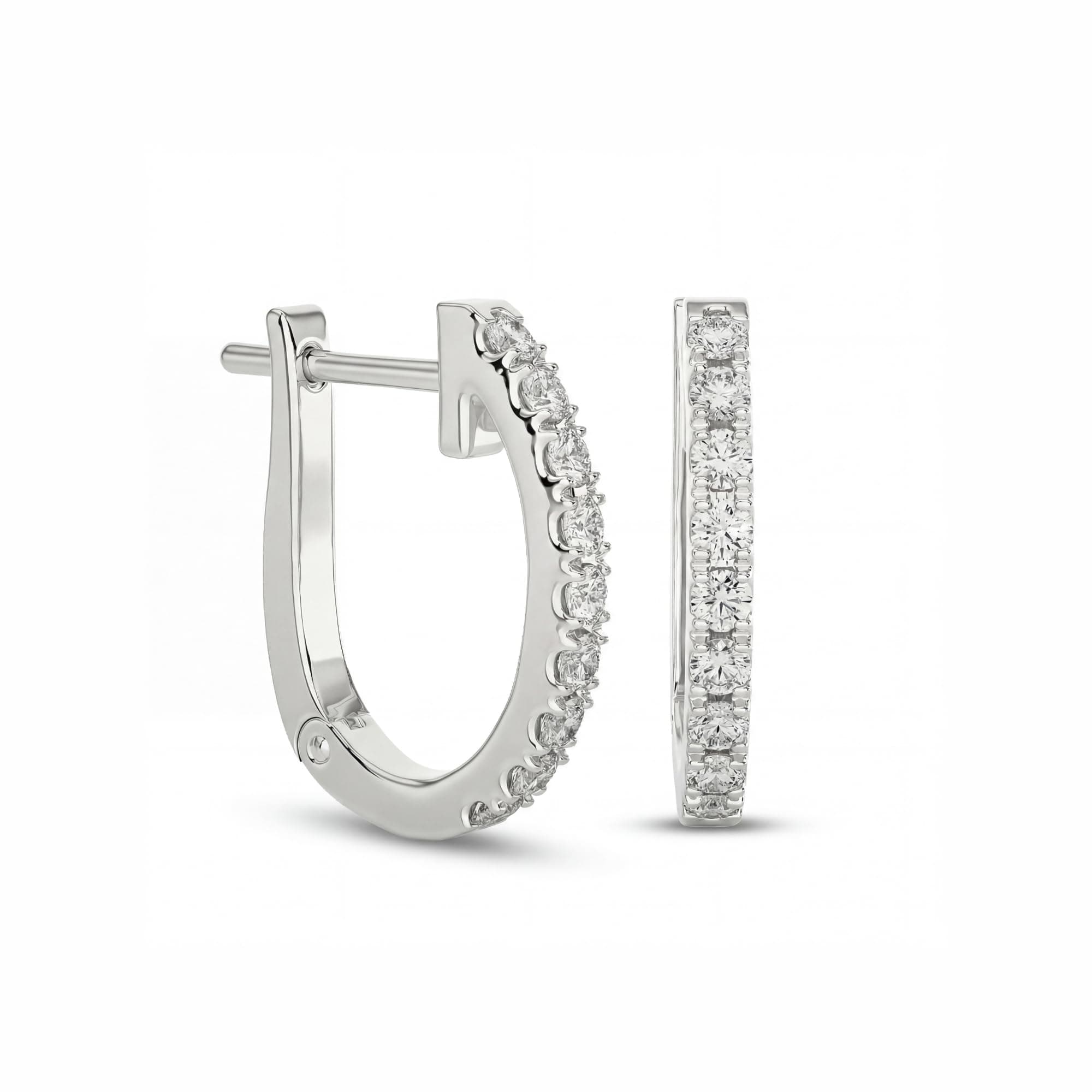
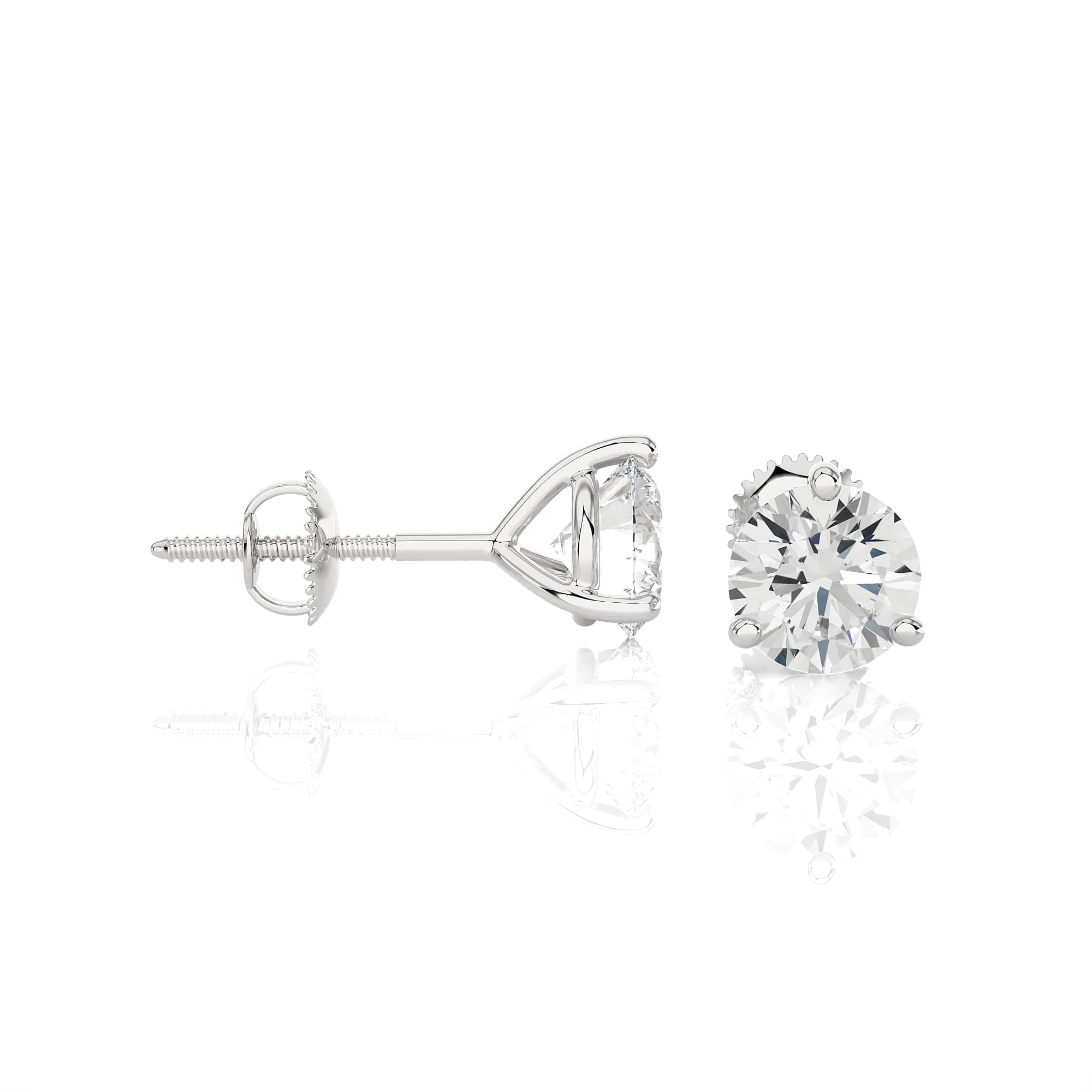
Diamond 4Cs explained: when you understand the four characteristics that define a diamond — cut, color, clarity, and carat — choosing one stops feeling like guesswork. The four work together, but they are not equally important, and knowing where each matters is what separates a confident purchase from an anxious one. This guide walks through all four in plain language, with practical advice on where to spend and where you can comfortably save.
Every diamond Privosa sells is a genuine diamond, whether natural or lab-grown, set in solid 14k gold. Some carry an IGI grading report, available on request; where a stone is not independently graded, we say so plainly. Either way, each piece arrives with a Certificate of Specification listing its carat, color, clarity, cut, and setting — so the 4Cs are not abstractions, they are written on the card in your hand.
The Diamond 4Cs Explained: What They Are
The 4Cs are the shared language the jewelry world uses to describe a diamond's quality: cut, color, clarity, and carat. They were standardized so that two people on opposite sides of a counter — or a catalog — could mean the same thing by the same words. Learning to read a diamond through this lens lets you compare pieces honestly rather than by photograph alone.
A useful way to hold them in mind: cut governs how a diamond behaves with light, color and clarity govern how clean and bright it appears, and carat governs how large it is. Three of the four are about appearance; one, carat, is simply weight. Keeping that distinction clear is half the battle.
Cut — the one that makes it sparkle
Of the four, cut is the one that most directly creates the life you see in a diamond. It is not the shape (round, oval, princess) but the precision of the stone's proportions, symmetry, and polish — how well the facets are angled to catch light, bounce it inside the stone, and return it to your eye. A well-cut diamond looks bright and lively even in dim light. A poorly cut one can look dull and glassy no matter how large or how colorless it is.
This is where we suggest you spend first. You can carry a slightly lower color or clarity grade and most people will never notice, but a weak cut is visible to everyone, immediately. If you are deciding between a bigger stone with a mediocre cut and a slightly smaller one cut well, choose the smaller one cut well — it will look more alive and, often, no smaller to the eye.
Cut is the difference between a diamond that sits there and a diamond that moves.
Color and clarity — where you can quietly save
Color, in the context of cut color clarity carat, refers to how little color a white diamond shows. Grades run from D (completely colorless) down through the alphabet toward faint yellow or brown. The important truth: the difference between adjacent grades is subtle, and once a diamond is set in gold and worn at arm's length, most eyes cannot tell a top colorless grade from one a few steps down. A near-colorless stone in the G to I range typically looks white in everyday wear at a gentler price than the D-E-F range.
The metal matters here. In yellow or rose gold, a touch of warmth in the diamond reads as harmony rather than flaw, so you can relax the color grade further. In white gold, a cleaner white stone shows its advantage more.
Clarity describes the tiny internal characteristics — called inclusions — that nearly every natural diamond carries, and that lab-grown diamonds can have as well. Grades range from Flawless down through Very Slightly Included and Slightly Included. The phrase to remember is "eye-clean": a diamond whose inclusions cannot be seen without magnification. You do not need flawless. You need eye-clean, and many stones in the VS and better SI range are exactly that for a fraction of the cost of the top grades.
A practical read on the grades
- Cut
- Spend here first — it creates the sparkle and is visible to everyone
- Color
- G–I usually looks white in wear; lean warmer in yellow/rose gold
- Clarity
- Aim for eye-clean (often VS–SI), not flawless
- Carat
- Weight, not size — and price rises sharply at round numbers
Carat — weight, not size
Carat is a measure of weight, not dimensions, and this catches many first-time buyers. Two diamonds of equal carat can look quite different in face-up size depending on how they are cut — a deep stone hides weight underneath, while a well-proportioned one shows it off. Price also tends to jump at the popular round numbers (half-carat, one-carat), because demand clusters there. Stepping just below a milestone weight can give you a stone that looks all but identical for noticeably less.
For earrings, remember that carat is usually given as total weight across the pair, so a "1 carat" stud set means roughly half a carat per ear. It is a small detail, but a meaningful one when you compare listings.
A simple order of priorities
- Start with cut. Protect it before anything else — it is what people actually see.
- Get the diamond eye-clean on clarity, then stop.
- Choose a color grade that suits your metal; warmer is fine in yellow and rose gold.
- Spend whatever remains on carat, and consider stepping just under a round number.
How to read a diamond on the certificate
With diamond grading explained in plain terms, the certificate stops being intimidating. On every Privosa piece you will find a Certificate of Specification listing the carat, color, clarity, cut, and setting, so you can hold the stone against its own description. Where a diamond has been independently graded, an IGI report is available on request; where it has not, we describe it as specified rather than implying a grading we did not perform. That honesty is the point — you should always know which kind of statement you are reading.
If a particular stone, grade, or report matters to you, our concierge team can talk it through by phone or email and usually responds the same day. There is no wrong question, and no pressure to land on the highest grade in every column. The best diamond is the one that looks beautiful to you and fits comfortably within what you intended to spend.
Understanding the 4Cs is less about chasing perfect grades and more about knowing which ones reward your attention. Protect the cut, keep the stone eye-clean, let the metal guide your color, and treat carat as the place to balance the budget. Do that, and whichever piece you choose will look the way a fine diamond should — bright, clean, and quietly confident on the hand or at the ear.
Frequently asked
Which of the 4Cs matters most?+
Cut, for most buyers. It governs how a diamond returns light, so it is the characteristic everyone notices, even from across a room. Color and clarity differences are far subtler in everyday wear. If you have to compromise on one C, protect the cut and ease up on the others.
Is a lab-grown diamond a real diamond?+
Yes. A lab-grown diamond is a genuine diamond, identical in chemistry and optical behavior to a natural one — the difference is how it formed. Privosa sells both. The same 4Cs apply to each, and both are described on the Certificate of Specification that ships with every piece.
Do I need a flawless, colorless diamond?+
Rarely. The practical targets are an eye-clean clarity grade — meaning inclusions are invisible without magnification — and a color grade that suits your metal, often the near-colorless range. Both look excellent in wear and leave more of your budget for cut and carat, where it shows.
Are Privosa's diamonds independently graded?+
Some are. Where a stone carries an IGI grading report, we can provide it on request. Where a stone is not independently graded, we say so plainly and describe it as specified. Either way, every piece includes a Certificate of Specification listing its carat, color, clarity, cut, and setting.
Does carat tell me how big the diamond will look?+
Not exactly. Carat is weight, not face-up size, and two stones of equal weight can look different depending on their cut. For earrings, carat is usually the total across the pair. A well-cut stone just under a round-number weight often looks as large as one above it, for less.